
A pollinator garden takes into account the needs of pollinators - bees, moths, beetles, butterflies and hummingbirds - by providing nectar and pollen. It is pesticide free and offers a variety of native species that bloom from spring through fall with flowers of different colours, shapes and sizes to suit all pollinators' tastes. Its habitat features can include a small water source, bee nesting sites and plants such as milkweed for Monarch Butterfly caterpillars. Your pollinator garden can begin as a container or span a full yard.
Anyone can participate: residents, schools, churches, businesses and farms. By planting pollinator-friendly plants, we are building a "pollinator pathway" across the City. The database you are helping to create can be used to ascertain what our pollinator corridor looks like, what plant species are doing well here, and what seasonal gaps are occurring so we can encourage planting of a wider variety of plants.
To help build our Pollinator Pathway, register your garden to add it to our Pollinator Pathway Map.
Pollinator Action Team

The Pollinator Action Team is a group of community volunteers who are formally recognized by Council as a Team under the Environmental Advisory Committee. The Team maintains the City's designation as a Bee City, a designation given by Bee City Canada, that reflects our commitment to promoting healthy pollinator populations and actively preserving and creating pollinator habitats. To discover more about the Bee City program, visit the Bee City Canada website.
Our Bee City Mandate
-
Create and Conserve Habitat: We are committed to establishing and preserving habitats that support pollinators, ensuring they have the resources they need to thrive.
-
Educate: We believe that knowledge is key to fostering a community that values and protects pollinators. Through educational initiatives and outreach efforts, we aim to raise awareness about the importance of pollinators and the actions individuals can take to support them.
-
Celebrate Pollinator Week: Every year, during the third week of June, we come together to celebrate Pollinator Week. This is a time to recognize the vital role pollinators play in our ecosystem.
Stay Connected
Don't miss out on the buzz! Hit the like button on our Bee City Facebook page to stay updated on all things pollinator-related. Join us in our mission to support pollinators and create a thriving environment for all!
Bee A Hero Garden Challenge
Our native pollinators are disappearing at an unprecedented rate. Bee Heroes help these essential critters by creating a pollinator habitat in their own backyard, farm, or balcony and taking before and after pictures. Applications are closed for this year's contest, but if you would like to enter next year, take a before picture of your garden or container prior to it being planted in the spring, and then an after picture once it has grown and upload your photos using our online submission form when the contest opens next spring. Both old and new gardens can enter.
Winners will be chosen across a few categories, including:
- Children's Garden (12 and younger)
- Adult's Garden (13 and older)
- Container Garden
Contestant gardens will be reviewed by our team and our winners will be chosen at the end of the submission period. Winners will be recognized and honoured for their great work by the Mayor and Council in a presentation at a future Council meeting. Participant's before and after pictures of their gardens, along with the write-up about their garden, will be included in the presentation to Council.
Please submit any questions to ckleac@kawarthalakes.ca.
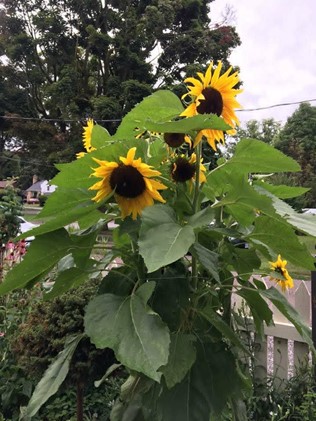
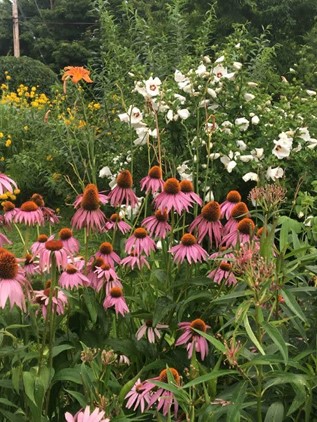
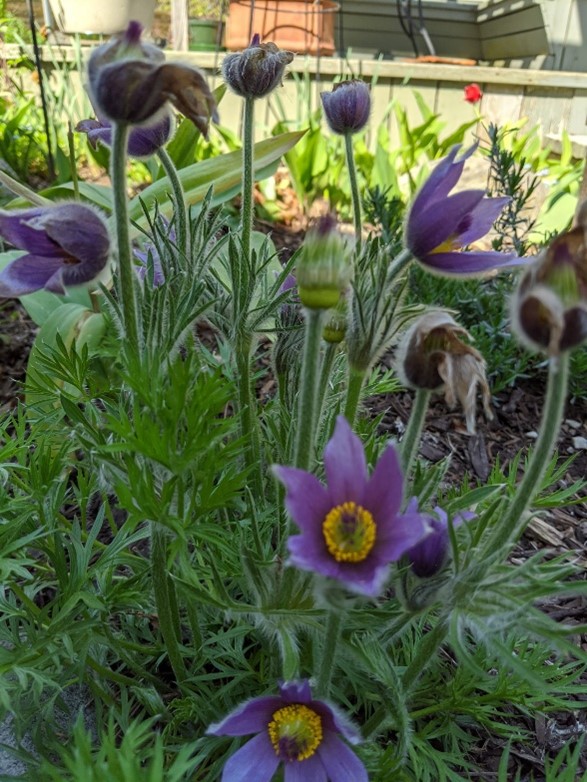
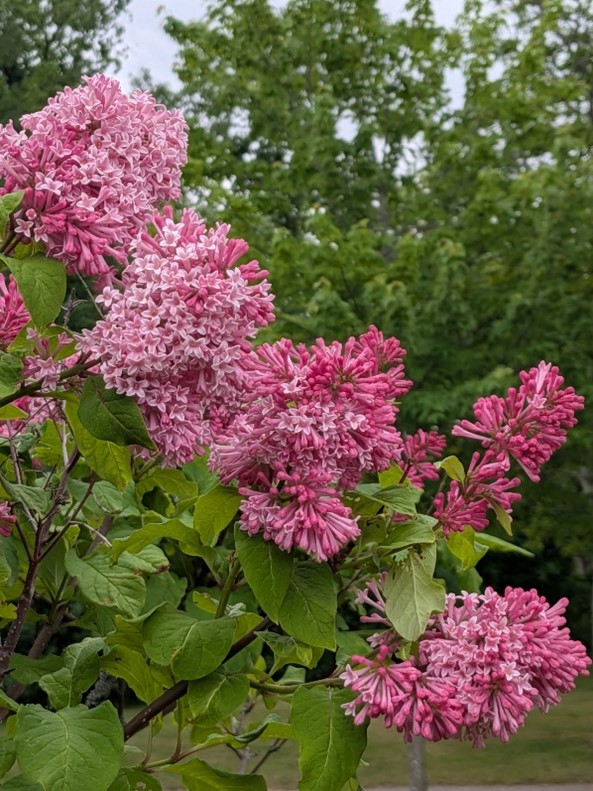
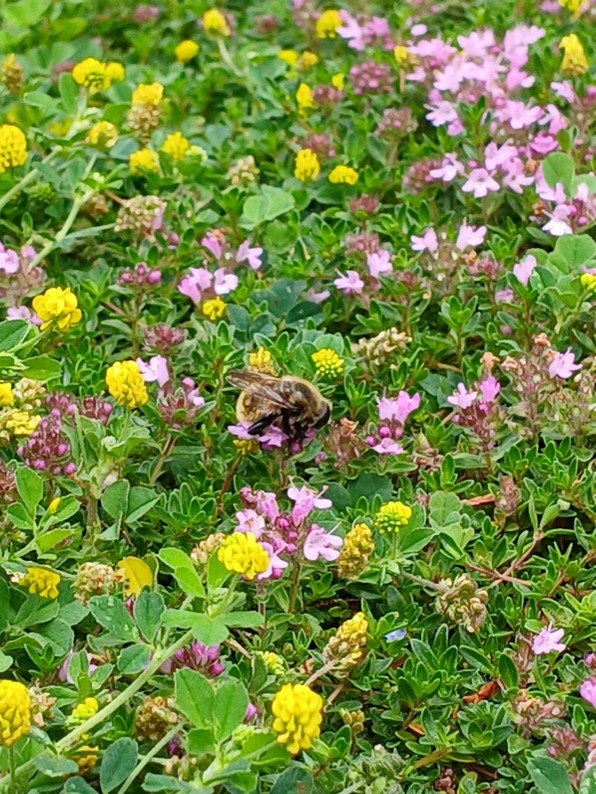
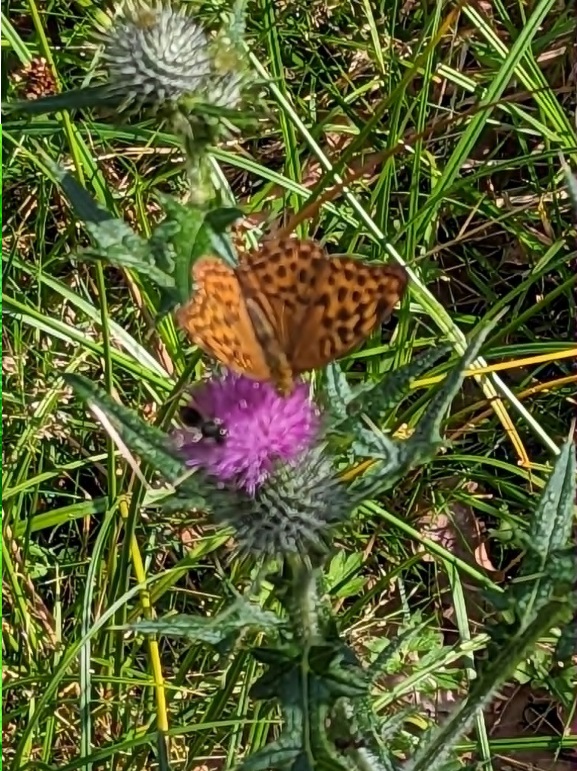
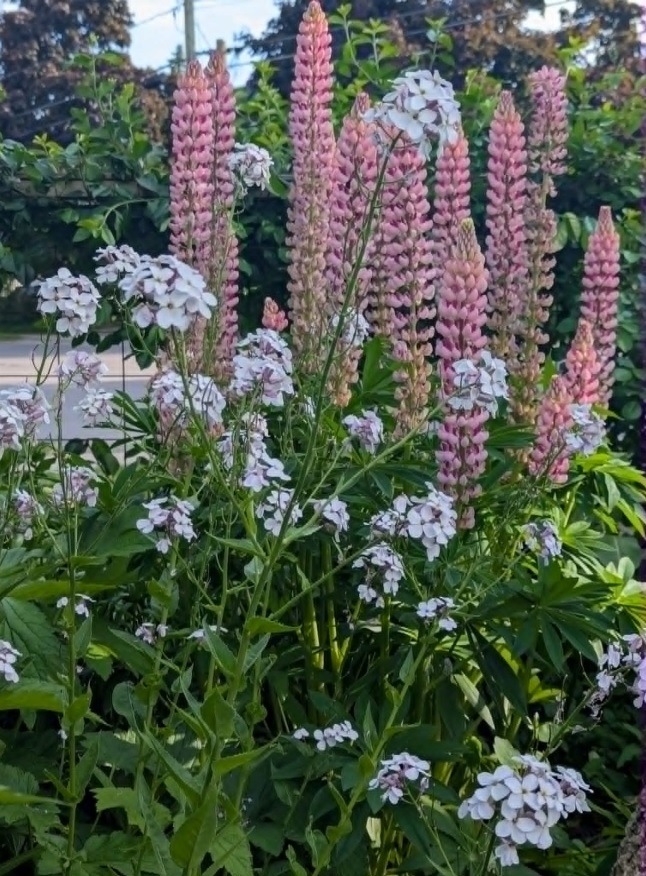
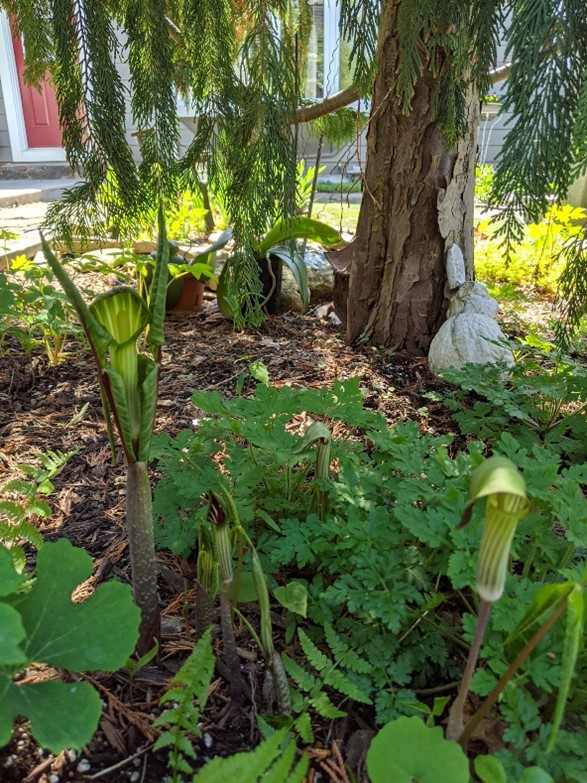
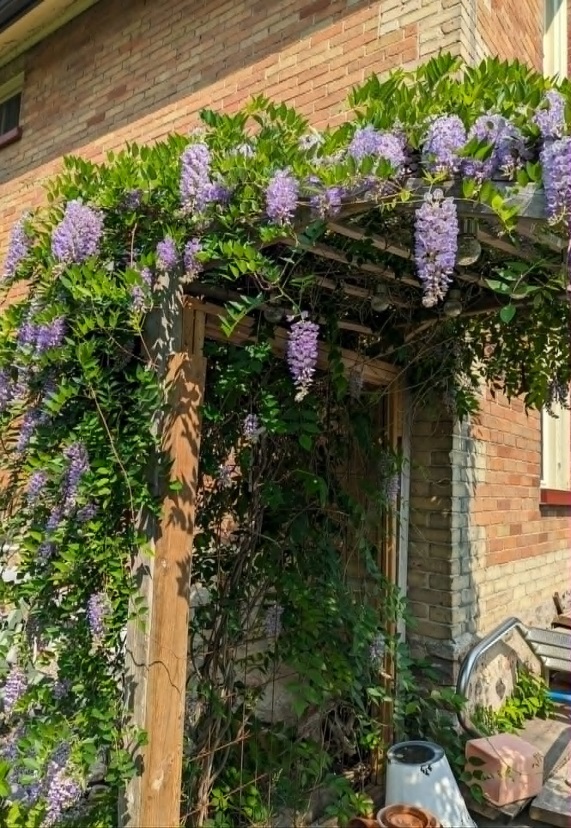
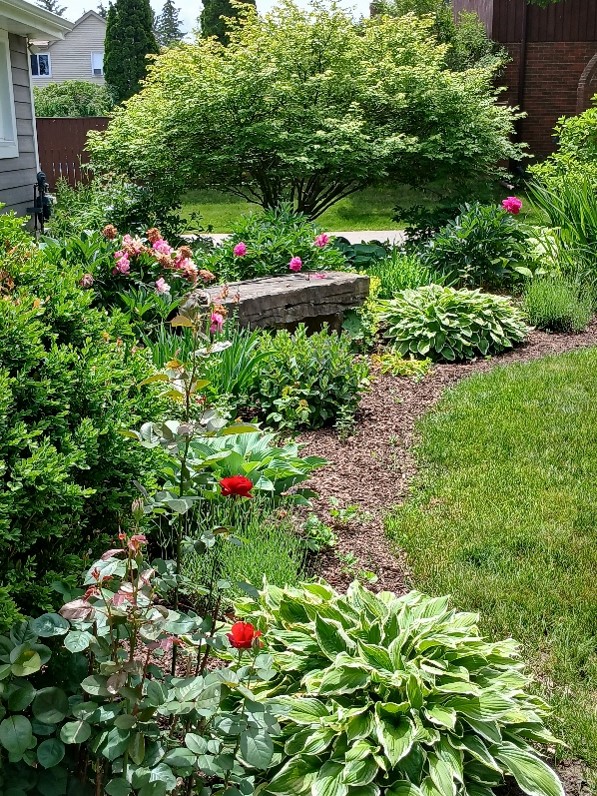
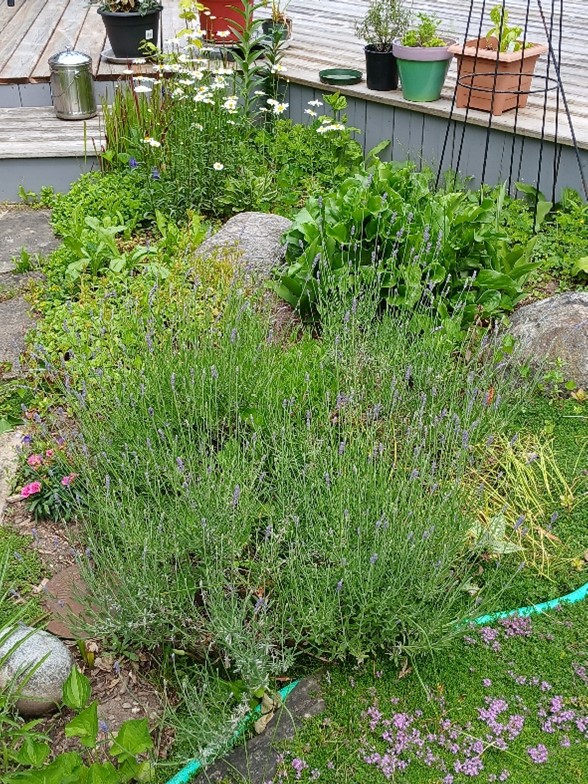
Congratulations to our 2025 Bee A Hero Garden Challenge winners!

Rosemary Deitch

Catherine Widjedal
Check out these pictures of the Bee A Hero winning gardens!
Helpful Resources
Join our Pollinator Pathway Map
A Message to Aspiring Beekeepers
Welcome to the wild and wonderful world of beekeeping! If you are just getting started, you are about to discover that keeping bees is much more than putting a box in the backyard and waiting for honey. It is part science, part art, part weather watching, part detective work, and occasionally, part comedy. The first time you open a hive and hear that familiar hum, smell the wax and honey, and watch thousands of bees moving with purpose, you realize you are being given a glimpse into an extraordinary world. Over the years, you will learn that the most important lesson in beekeeping is to respect the bees. They are not pets or machines; they are a complex, living community with their own rhythms and needs. Your job is not to control them, but to understand them, work with them, and give the colony the best chance to thrive.
Beekeeping will teach you patience, observation, and humility. There will be days when everything goes perfectly and others when the bees have a completely different plan. That is all part of the journey. Learn to watch your bees, listen to the hive, recognize the signs of a healthy colony, and understand what changes when something isn't right. Don't be afraid of mistakes; every experienced beekeeper has made plenty. Keep learning, ask questions, find experienced beekeepers to learn from, and spend time with your colonies. Before long, you'll find yourself watching the seasons differently, noticing flowers, weather, and the changing landscape through the eyes of your bees. The honey is certainly a wonderful reward, but the real joy is becoming part of the remarkable world of the hive. Welcome to beekeeping—it's going to be quite an adventure.
Advice from a veteran beekeeper:
Plan to study beekeeping for at least a year before even thinking about getting your own bees.
1) Take a beekeeping course
2) Join the Central Ontario Beekeepers Association discussion group
3) Subscribe to a magazine
4) Team up and work with an experienced beekeeper
Individual schools can become part of the Bee City family by making a pledge to protect pollinators and their habitats. Learn how to become a Bee School today.
We currently have 2 officially designated Bee Schools in Kawartha Lakes: Langton Public School in Fenelon Falls and Dunsford District Elementary School in Dunsford.
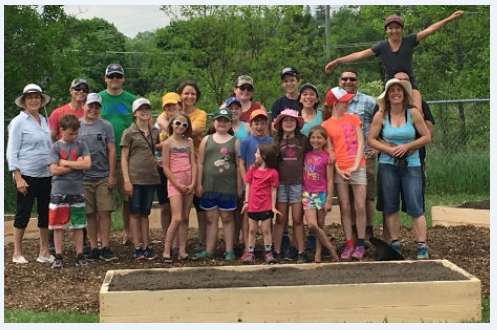
Pictured above: Langton Public School
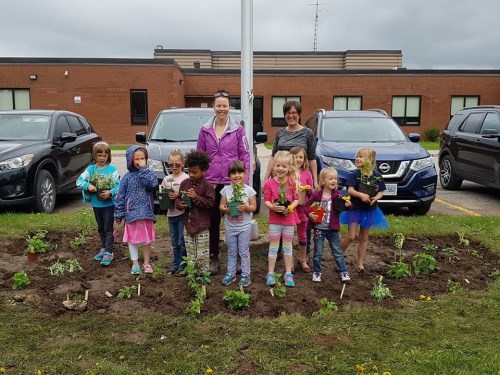
Pictured above: Dunsford District Elementary School
Pollinator Health and Research
- Get to know your pollinators
- Learn about Pollinator Health
- Canadian Wildlife Federation's Action for Pollinators
- Submit Bumble Bee sightings
- Submit other bee and insect sightings
How to Create Pollinator-Friendly Gardens
You can help pollinators by creating foraging and nesting opportunities in your garden. Here are some tips to attract bees and butterflies to your garden.
Plant native
Choose native shrubs, trees and perennial flowers rich in pollen and nectar. Locally grown and pesticide free are best. For native plants, visit Kawartha Conservation.
Mass plantings
Planting multiples of the same plant together in large groupings makes it easier for pollinators to find and collect pollen.
Choose single blooms
Double or triple bloom flowering varieties with lots of petals can block access to pollen and nectar. Keep this in mind when choosing plants for your gardens.
Continuous bloom
Pollinators need a continuous source of pollen and nectar; so choose a variety of plants that will bloom from spring to fall.
Plant host plants
Butterflies lay their eggs on specific plants. Monarch butterflies, for example, will only lay their eggs on milkweed, the sole food source for their larva. Choose a variety of host plants to support many different pollinators.
Provide water
Provide a bird bath or shallow dish of water with half-submerged rocks to help bees and butterflies quench their thirst.
Provide sun
Butterflies like to bask in the sun, so place a few flat rocks in sunny, sheltered locations to give them safe places to rest.
Keep it natural
Converting a lawn or garden to concrete, gravel, mulch or artificial turf reduces valuable food and nesting sites. Leave your yard natural whenever possible.
Bare ground
Many native bees build nests in soil, so leave some bare patches and limit your use of mulch.
Leave dead stems
Some bees hibernate and lay eggs in hollow stems. If you do cut plant stalks, leave the bottom 8 inches, or bundle the stems together and place them in your garden.
Leave the leaves
Leave the leaves where they fall or rake them into your garden to provide overwintering habitat for butterflies.
Prune and deadhead
Remove dead flower heads to encourage new growth and extend the flowering season.
Reduce mowing
To avoid disturbing ground nesting bees, mow your lawn less often and set the blade at the highest level possible.
Avoid pesticides
Avoid plants/seeds treated with systemic insecticides, such as neonicotinoids, and don't use pesticides. Pesticide Bylaws ban the cosmetic use of pesticides.
Turn off lights
Help our nocturnal pollinators such as moths by remembering to turn off your outdoor lights at night.
Spring
- Shrubs
- Pussy Willow
- Saskatoon Serviceberry
- Chokecherry
- Blueberry
- Nannyberry
- Red Elderberry
- Black Elderberry
- Common Snowberry
- Downy Serviceberry
- New Jersey Tea
- Wild Flowers
- Hepatica
- Trillium
- Trout Lilly
- Canada Violet
- Yellow Wood Violet
- Wild Columbine
- Canada Wild Ginger
- Wild Blue Lupine
- Blanket Flower
- Wild Strawberry
- Prairie Smoke
- Bloodroot
Summer
- Shrubs
- Staghorn Sumac
- Elderberry
- Red Raspberry
- Blueberry
- Shrubby Cinquefoil
- Ninebark
- Northern Smooth Rose
- Buttonbush
- Fragrant Sumac
- Wild Flowers
- Common Yarrow
- Purple Cone Flower
- Black Cohosh
- Lavender Hyssop
- Pearly Everlasting
- Wild Columbine
- Canada Wild Ginger
- Wild Blue Lupine
- Wild Bergamot
- Common Milkweed
- Butterfly Milkweed
- Swamp Milkweed
- Great Blue Lobelia
- Blanket Flower
- Tansey
- Lance Leaved Coreopsis
- Black Eyed Susan
- Soapwort
- Bottlebrush Grass
- Indian Grass
- Canada Rye Grass
- Sweet Oxeye
- Ragged Blazing Star
- Grey Headed Coneflower
- Dense Blazing Star
- Cardinal Flower
- Hoary Vervain
- Bee balm
Fall
- Shrubs
- Witch Hazel
- Buttonbush
- Wild Flowers
- Common Yarrow
- Purple Cone Flower
- Black Cohosh
- Lavender Hyssop
- Pearly Everlasting
- Bergamot
- Helen's Flower/Sneezeweed
- Spotted Joe Pie Weed
- Boneset
- Great Blue Lobelia
- Blanket Flower
- Black Eyed Susan
- Cardinal Flower
- Turtlehead
- Ironweed
- Zig-Zag Goldenrod
- Upland White Goldenrod
- Stiff Leaved Goldenrod
- Foxglove Beardtongue
- New England Aster
- Flat Topped White Aster
- Smooth Aster
- Heath Aster
- Heart-Leaved Aster
- Smooth Aster
- Panicled Aster
Grow Wild! Native Plant Nursery
Paul Heydon
3784 Highway 7
Omemee, ON, K0L 2W0
Green Side Up Environmental Services and Landscaping
Doug Kennedy
121 Grassy Rd
Omemee, ON, K0L 2W0
289-892-2827
437 Mark Rd
Cameron, ON, K0M 1G0
705-374-4700
1899 Ashburnham Dr
Peterborough, ON, K9L 1P8
705-927-1104
4965 Westney Rd
Pickering (Claremont), ON, L1Y 1A2
416-888-3363
1-866-476-9453
705-295-6440
- A Flower Patch for the Rusty-Patched Bumblee: Creating Habitat Gardens for Native Pollinators in the GTA
- Bee City Canada
- Beyond Pesticides
- Butterflies and Moths of North America
- Butterflies of Ontario
- Canadian Wildlife Federation
- David Suzuki - Create Pollinator Friendly Garden
- Friends of the Earth
- How to Build a Butterfly Garden
- Monarch Watch
- North American Native Plant Society
- Peterborough Pollinators
- Pollination Guelph
- Pollinator Partnership
- Pollinators, Busy Doing What?
- Starting Flower Seeds
- Xerces Society


