Water Quality
Learn how Kawartha Lakes treats, tests and monitors drinking water, plus information about water quality, chlorine, taste, odour, hardness and sodium.
On this page
- How we treat your drinking water
- Sampling, testing and monitoring
- Chlorination
- Disinfection by-products (DBPs)
- Chloramination
- Taste and odour
- Water hardness
- Water pressure
- Sodium in drinking water
- Annual water quality reports
For information about drinking water licensing and regulations, visit our Licensing and Regulations page.

Water Sampling
For additional water sampling or private well water questions, contact Lakelands Public Health at 1-844-575-4567 or visit lakelandsph.ca
How we treat your drinking water
The City of Kawartha Lakes is committed to providing safe, reliable drinking water. Municipal drinking water is treated and tested according to requirements set by the Ontario Ministry of the Environment, Conservation and Parks (MECP). The City meets and exceeds these requirements.
Treatment process
Drinking water in Kawartha Lakes is safe to drink. All drinking water distribution systems maintain a regulatory level of disinfectant to help prevent bacterial growth and keep water safe as it travels from the treatment plant to your tap.
Licensed water operators make sure water goes through a treatment process before it reaches your home.
The treatment process includes:
- Screening to remove debris
- Chemical treatment
- Filtration
- Disinfection
- Secondary disinfection after water enters the distribution system*
*not applicable to all drinking water systems.
The City does not add fluoride to drinking water in any of its drinking water systems.

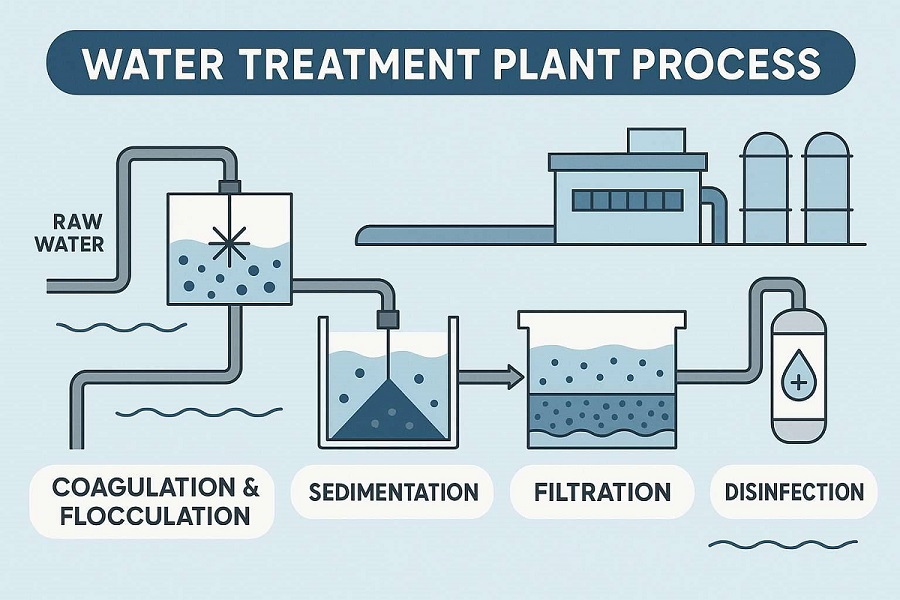
How water moves through a treatment plant
The main steps in the water treatment process are:
- Raw water
- Coagulation and flocculation
- Sedimentation
- Filtration
- Disinfection
Sampling, testing and monitoring
Water sampling, testing and continuous monitoring are required by law.
City water operators continuously monitor drinking water and watch for changes in water quality. They collect samples at different points in the treatment process, including:
- Raw water
- Treated water
- Water in the distribution system
Samples are tested for microbiological and chemical characteristics.
The City's drinking water systems are sampled, tested and monitored according to Ontario's drinking water regulations. This helps make sure residents, businesses and visitors have access to safe drinking water.
Drinking water advisories
If a water sample shows a potential concern, the local health unit may issue a drinking water advisory or boil water advisory.
If an advisory is issued, the public will be notified through:
- Kawartha Lakes website
- Kawartha Lakes social media
- Local radio stations
- Hand-delivered notices, when needed
You can also subscribe to receive drinking water advisory notifications through the Lakelands Public Health website.
Lead sampling
The City is required under the Safe Drinking Water Act (O. Reg. 170/03) to conduct lead sampling in its drinking water systems.
pH and alkalinity samples are collected twice a year, once in the summer and once in the winter. These are used to monitor conditions that can affect lead levels.
The City also completes distribution system lead sampling once every three years.
All samples are tested by an accredited laboratory, and the results are sent to the Ministry of the Environment, Conservation and Parks.
Chlorination
Why is chlorine added to drinking water?
Chlorine is added to drinking water to kill harmful germs.
Chlorine levels are kept well within regulated limits and are monitored 24 hours a day. Chlorine helps reduce bacteria, viruses and parasites in drinking water. It also helps prevent bacteria from growing or re-entering the water as it travels through watermains and pipes to your home.
Most drinking water treatment plants in Canada use some form of chlorine for disinfection. When used properly, chlorine is a safe and effective way to disinfect drinking water.
When combined with modern filtration methods, chlorine is effective against virtually all microorganisms. Only a small amount of chlorine remains in the water as it travels through the distribution system.
This remaining chlorine helps prevent the water from becoming contaminated again after it leaves the treatment plant.
Chlorine has been used to safely disinfect drinking water for more than 100 years. Its use has helped dramatically reduce and virtually eliminate waterborne diseases such as typhoid fever, cholera and dysentery.
Why can I sometimes smell or taste chlorine?
A chlorine smell or taste can be caused by chlorine dissolving into the water or by changes in temperature.
To reduce the taste or smell of chlorine, keep a covered jug of water in the refrigerator. The chlorine will dissipate over time.
Disinfection by-products
Disinfection by-products (DBPs) are chemicals that can form when chlorine is used to disinfect drinking water.
One of the most common types of DBPs found in chlorinated water is trihalomethanes (THMs). THMs form when chlorine or other disinfectants react with naturally occurring organic matter in source water, such as vegetation, animal waste and leaves.
Surface water from lakes, rivers and streams generally has higher THM levels than groundwater from wells and aquifers. THM levels can also be higher during warmer weather when plants and animals are more active.
High levels of THMs can be harmful to human health over a long period. However, the maximum acceptable concentration (MAC) is set well below levels that could cause harm. The City carefully monitors THM levels.
Under the Canadian Drinking Water Guidelines and Ontario Drinking Water Quality Standards, the MAC for THMs is a running annual average of 100 micrograms per litre (µg/L), based on a minimum of four samples.
At this level, the lifetime health risk is considered extremely low. Water that meets the THM guideline is considered safe for all domestic uses, including:
- Drinking
- Bathing
- Showering
- Food preparation
THM levels for all 21 drinking water systems in Kawartha Lakes are included in the City's annual water reports.
Drinking water in Kawartha Lakes is treated, sampled and monitored by City water operators, the Ministry of the Environment, Conservation and Parks (MECP) and the local health unit to make sure it meets water quality standards.
Chloramination
Two drinking water systems in Kawartha Lakes use chloramination as an additional disinfection method:
- Bobcaygeon Drinking Water System (since 2008)
- Fenelon Falls Drinking Water System (since 2020)
What are the benefits of chloramination?
There are several safe treatment methods that meet MECP requirements. Chloramination provides additional benefits, including helping the City meet stricter regulatory standards and reducing chlorine-related disinfection by-products such as THMs.
Chloramine is also more stable than chlorine. It lasts longer in the distribution system and provides continuous disinfection as water travels through the system.
Does chloraminated water taste different?
It is unlikely that you will notice a difference in taste.
Do other municipalities use chloramination?
More than 100 municipalities in Canada are estimated to use chloramination. This includes larger cities such as Toronto, Ottawa and Hamilton.
Is chloraminated water safe?
Yes. Current studies indicate that drinking or using water with regulated levels of chloramine does not cause harmful health effects. Chloramination also helps protect against waterborne disease outbreaks.
Chloraminated water is safe for:
- Drinking
- Cooking
- Bathing
- Other general uses
Does anyone need to take special precautions?
As with chlorine, two groups need to take special precautions when using chloraminated water:
Dialysis patients
Chloramines can be harmful if they enter the bloodstream directly. Chloramines must be removed from water used for dialysis treatments.
Fish and amphibian owners
Chloramines can damage fish gill tissue and enter the red blood cells of fish, causing a sudden and severe blood disorder. Chloramines must be removed from water before it comes into contact with fish.
How can chloramine affect plumbing and water heaters?
Rubber parts in some household plumbing and water heaters may break down faster when exposed to chloramine.
When replacing rubber plumbing parts, ask for chloramine-resistant parts. These parts are readily available through plumbing and hardware supply stores and plumbers.
Where can I learn more about chloramination?
For health-related questions, contact:
Health Canada: 1-613-957-2991
Lakelands Public Health: 1-844-575-4567
Taste and odour
You may notice a musty taste or odour in your drinking water during periods of changing weather in the winter and spring, or during the warmer summer months.
These taste and odour changes are natural. They are caused by seasonal changes in source water that produce odour-causing organic compounds. People can detect these compounds even at very low levels.
Many Ontario municipalities that use surface water sources experience these changes from time to time during the summer.
Your tap water remains safe to drink during seasonal taste and odour episodes.
Seasonal taste and odour changes are not a threat to public health. Our water treatment plants have filtration systems that help reduce these effects, although they may not eliminate them completely. Taste and odour can vary from year to year.
How can I improve the taste or smell?
Try these simple steps:
- Keep a covered jug of water in the refrigerator
- Add ice cubes or lemon juice to your water
- Run your cold water tap for a few moments
If you are concerned about wasting water when running your tap, collect the water and use it to water your plants.
Chlorine can also affect the taste or smell of drinking water. A small amount of chlorine needs to remain in the water as it travels through the distribution system to prevent re-contamination.
If you notice a chlorine taste or smell, putting a covered jug of water in the refrigerator overnight will help remove it.
For more information, visit the Health Canada website.
Questions? Contact Us
Email: inquiries@kawarthalakes.ca
Telephone: 705-324-9411
Toll free at 1-888-822-2225
After-hours emergencies: 1-877-885-7337
Contact Us
Kawartha Lakes
P.O. Box 9000, 26 Francis Street
Lindsay, ON, K9V 5R8
Telephone: 705-324-9411
Toll free at 1-888-822-2225
After-hours emergencies: 1-877-885-7337